A question at the table
We started asking what actually goes into the snacks we were buying every week. Nobody in the family had a good answer, and that bothered us.
 Custom branding from 25 hampersFestive weeks need 7–10 days of lead time.
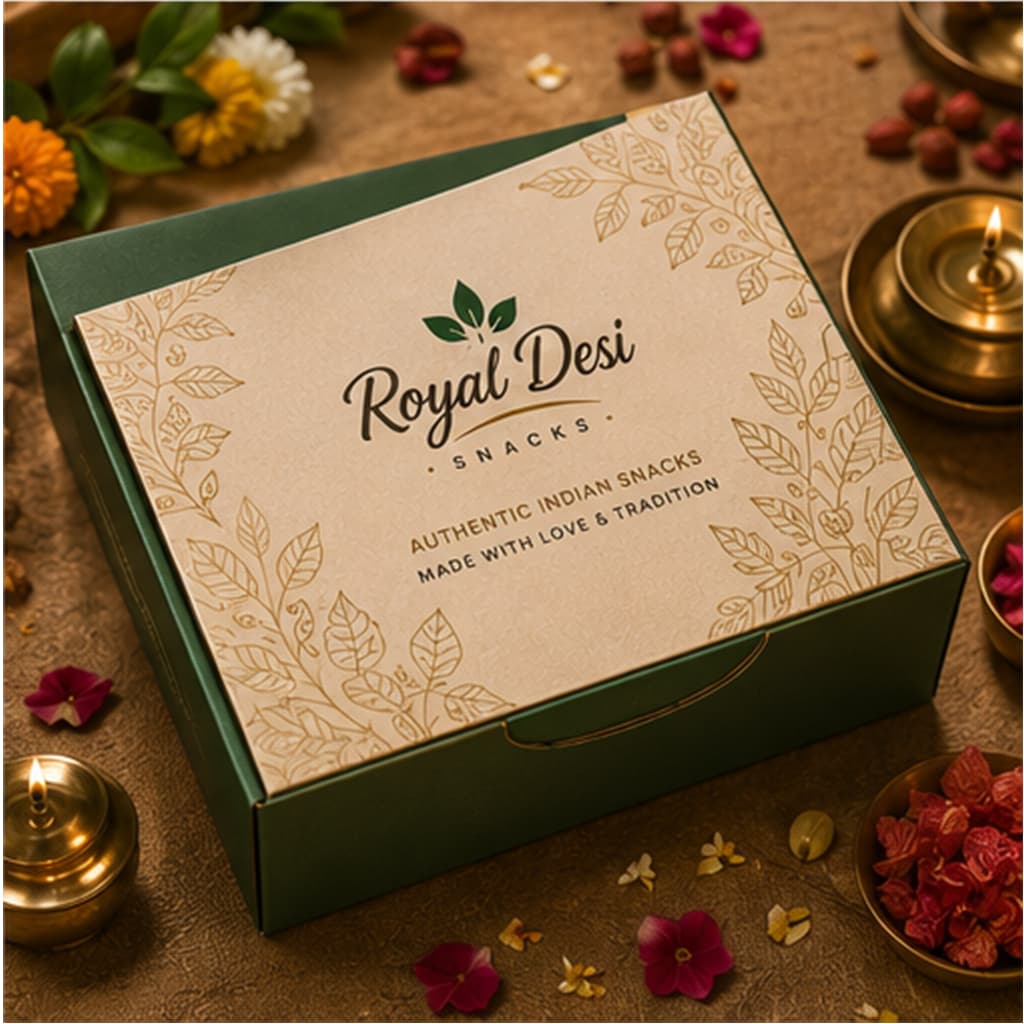
Employee hampers, client thank-yous, wedding favours and festival boxes — packed to order in our own kitchen, with your branding on the outside and nothing artificial on the inside.
Curated boxes of all four flavours, sealed the day they are baked.
Diwali, Holi and Raksha Bandhan editions with festive sleeves.
Volume pricing from 25 units, GST invoicing, one named contact.
Your logo on the sleeve and a printed note inside every box.
Elegant favours in your colours, delivered to one or many addresses.
Wholesale, distribution and private-label conversations start here.
Bulk quotes within one working day · Corporate orders
Royal Desi began as a family idea in 2022 and became a brand in 2026 — traditional Indian snacks, made in our own kitchen from ingredients we pick ourselves.
Have you ever turned a packet over and actually read what is in the snack you are about to eat? A few years ago my family and I started doing exactly that, and we did not much like the answer.
So we asked ourselves a simple question: why not make something delicious and traditional, using ingredients we choose and trust ourselves? That conversation, around 2022, is where Royal Desi actually begins — not with a plan, but with a family deciding to try.
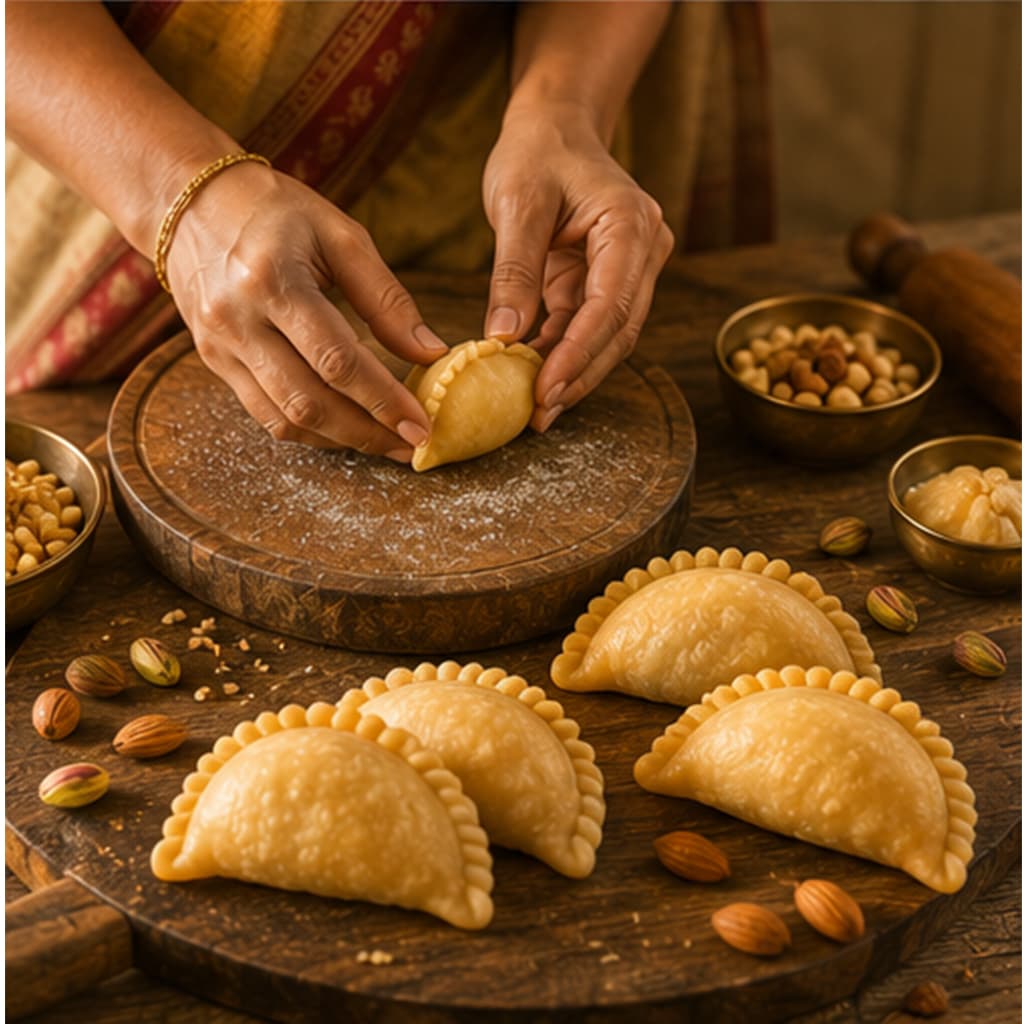
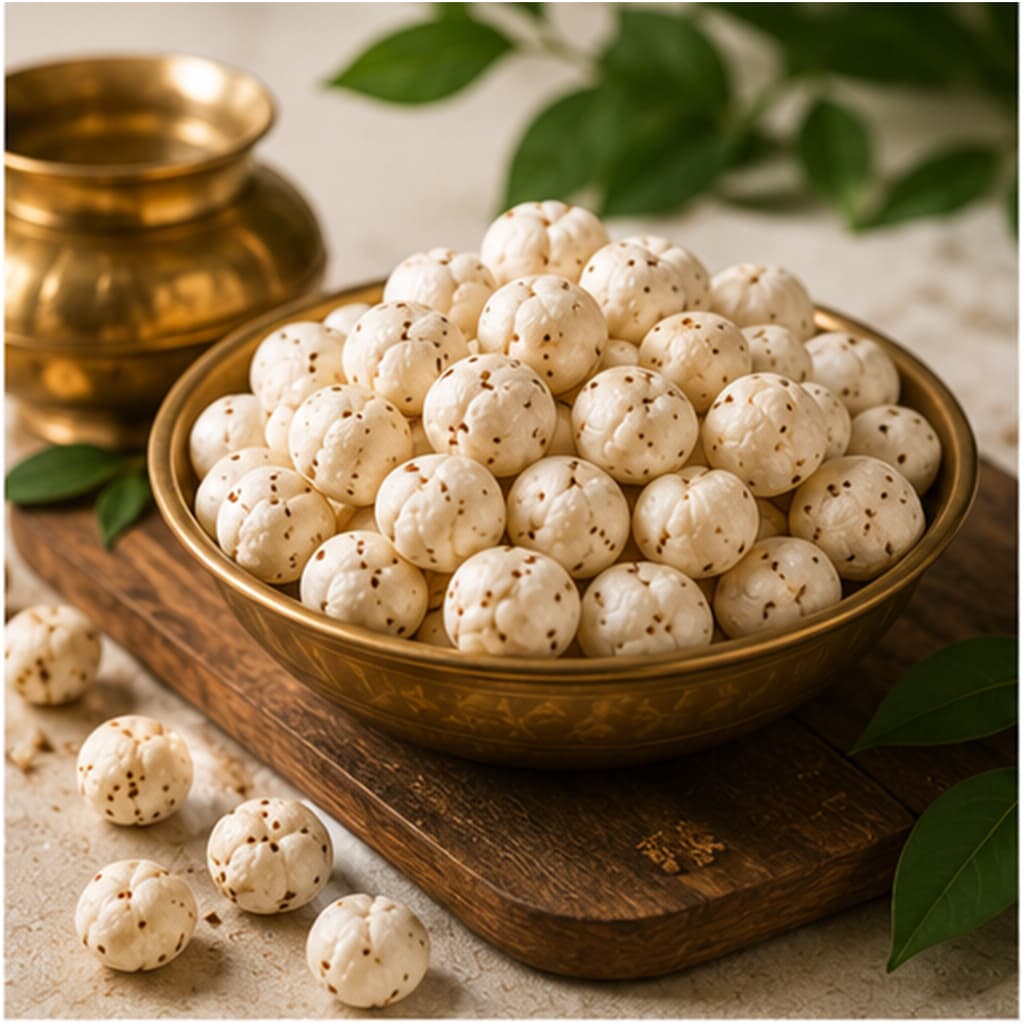
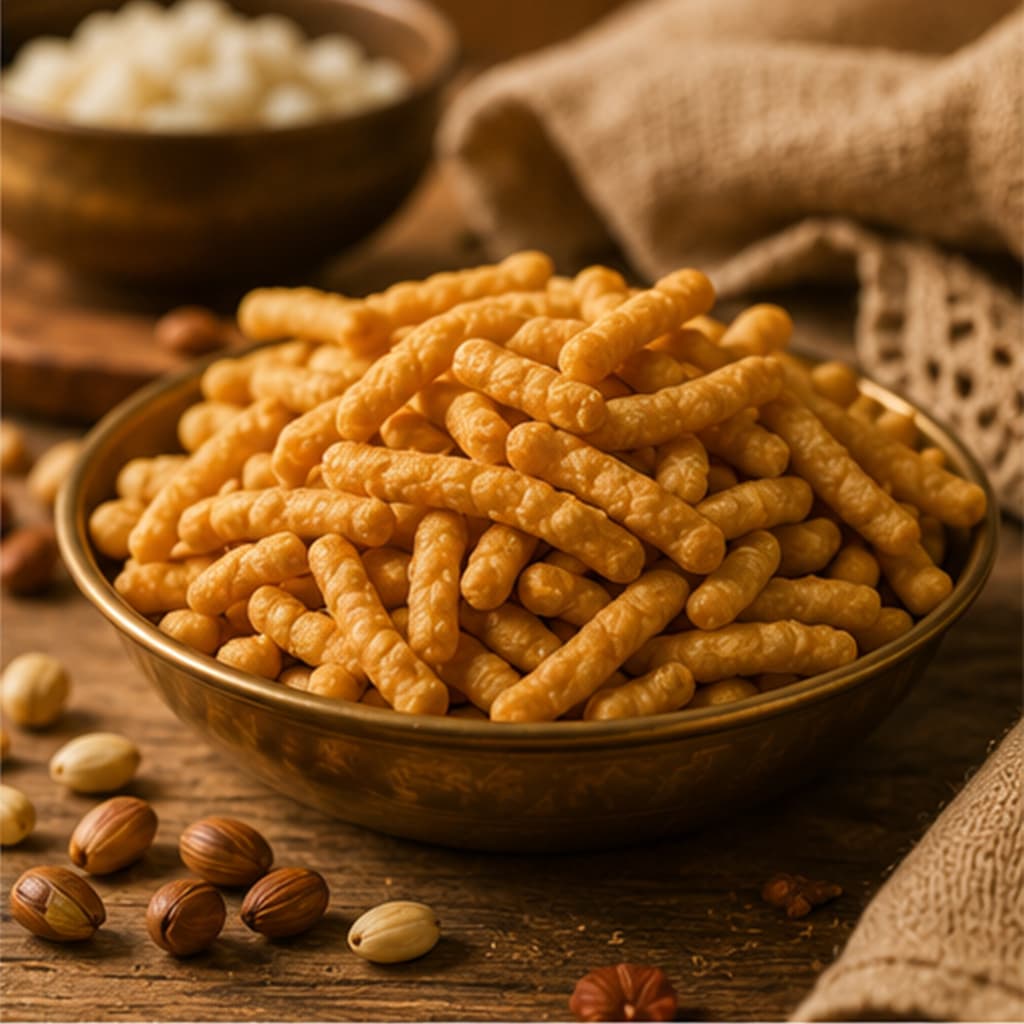
What followed was a lot of cooking. We made Thekua the way it is made at home, then Namakpare, then Roasted Makhana and Gujiya. We changed things, tried again, and handed batches to friends and relatives who told us honestly when something was not right.
In 2026 we registered Royal Desi and began selling properly. The kitchen is still in Delhi and still ours. What changed is that these snacks can now reach your home instead of only our neighbours'.
“We wanted to bring the authentic flavours of traditional India into your home — familiar, and a little bit special.”
We started asking what actually goes into the snacks we were buying every week. Nobody in the family had a good answer, and that bothered us.
Batch after batch in our own kitchen. Recipes adjusted, ingredients swapped, and a lot of honest feedback from people who had no reason to be polite.
The brand was registered and launched — the same recipes and the same kitchen, now with packaging, a name, and a way to reach people beyond our neighbourhood.
Thekua, Namakpare, Roasted Makhana and Gujiya — each held to the question we started with, and shipped across India.
That was the whole point of starting. If we would not use it at home, it does not go into a pack.
We keep away from unnecessary artificial colours and preservatives wherever the recipe allows it.
We make to a schedule rather than to a warehouse, because these snacks are best when they are fresh.
The recipes are the ones people already know. What we have changed is how carefully they are made and how well they travel.
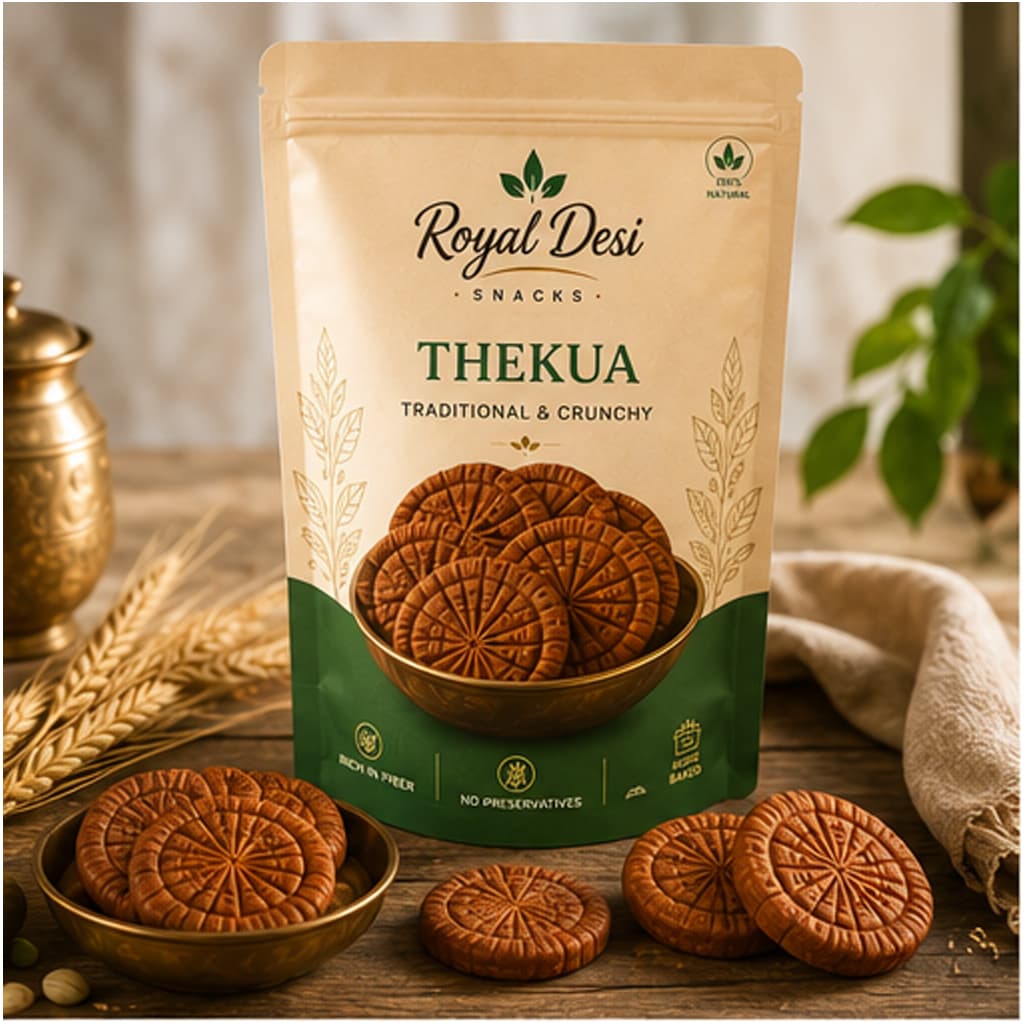
Nothing here is optimised for speed. Every batch goes through the same five stages, in our own kitchen.
Makhana from Bihar and West Bengal, wheat from the northern plains, jaggery from Uttar Pradesh and Maharashtra — each from a region that grows it well.
Dough is worked by hand in small lots. Machines are quicker; hands can feel when the atta has had enough.
The same carved sanchas families have used for generations press the pattern into every Thekua.
Low, patient heat lets jaggery caramelise and layers set — the crunch is structural, not greasy.
Every batch is cooled fully, hand-inspected, then sealed the same day.
Every one of them made to the same standard we set at that first kitchen table.
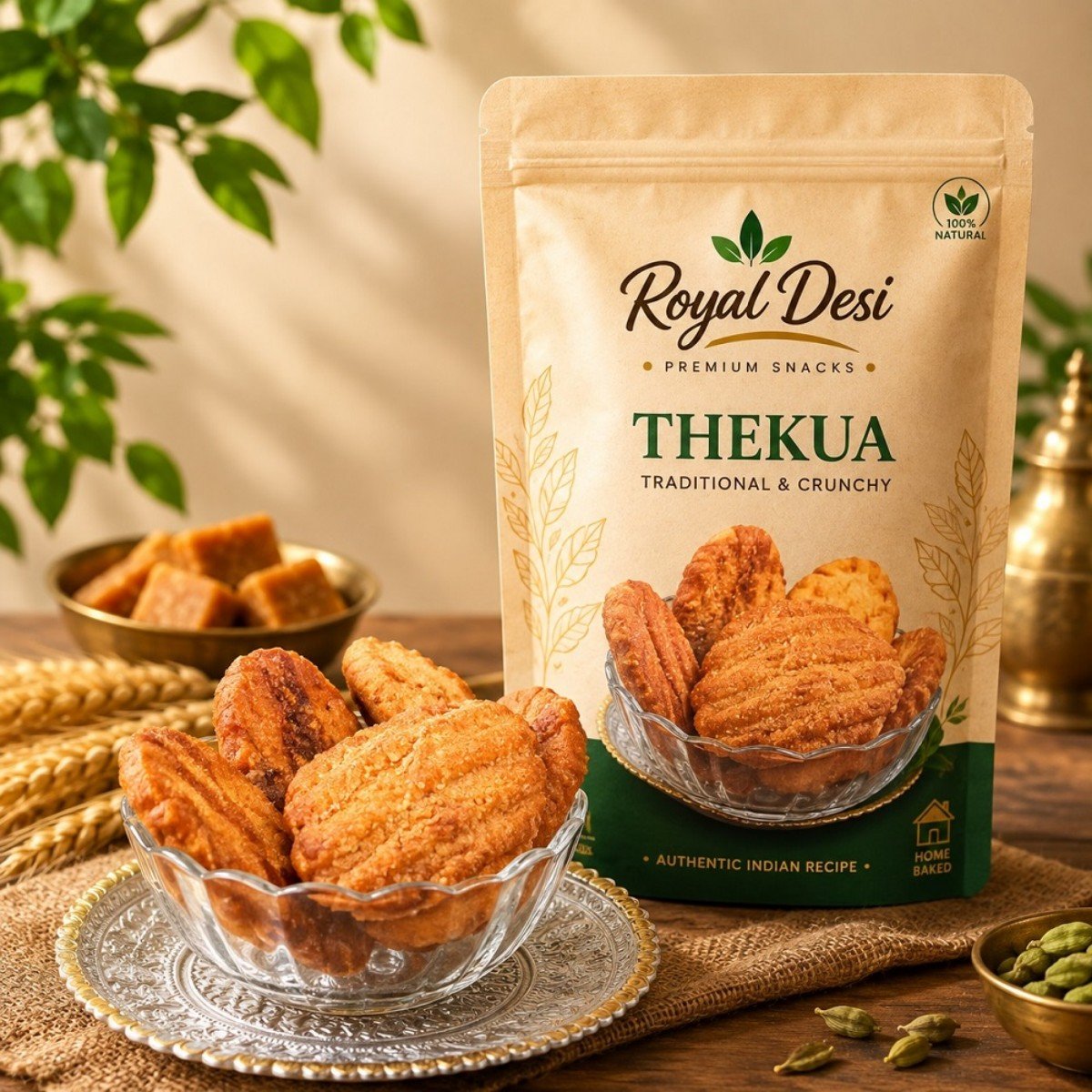
Inclusive of all taxes
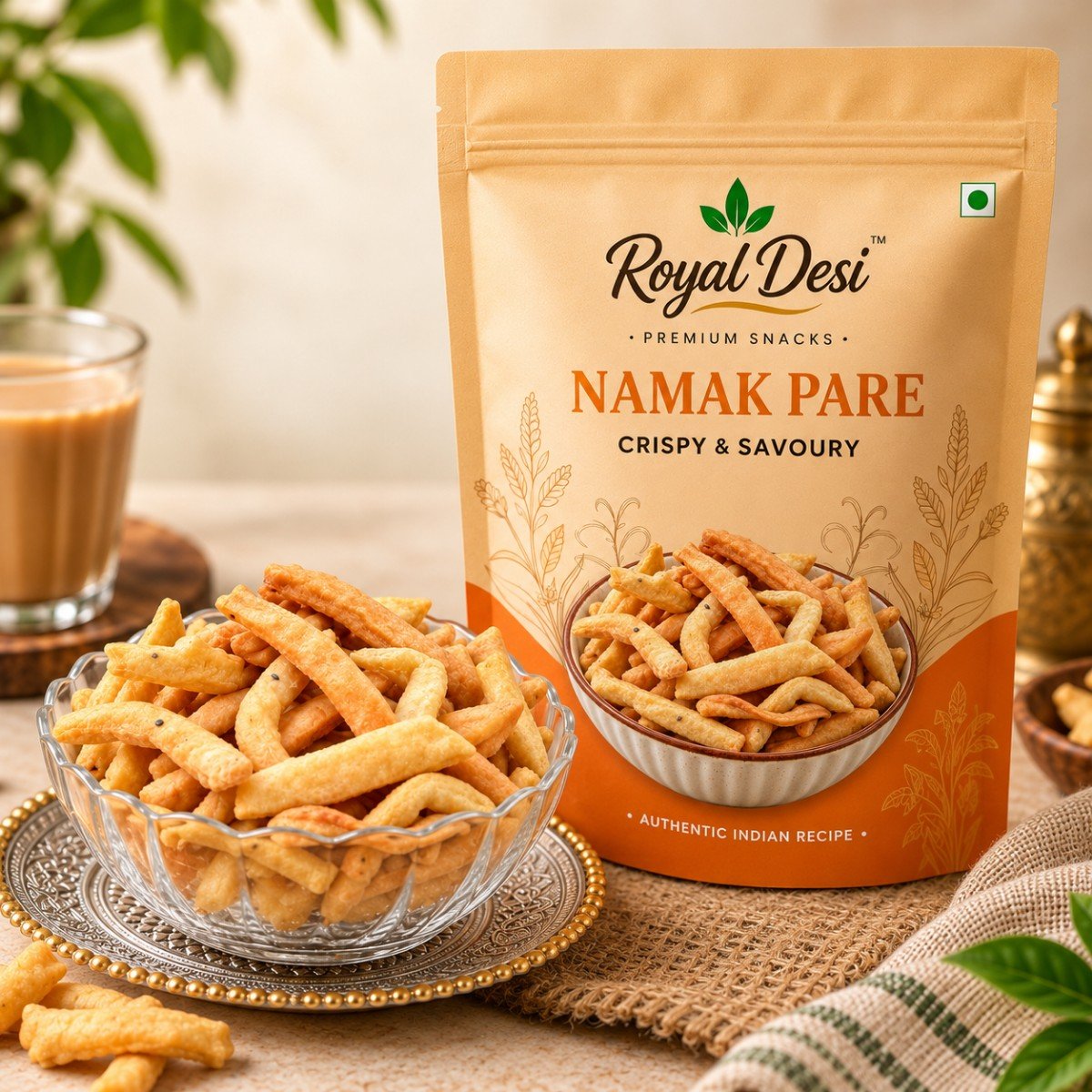
Inclusive of all taxes
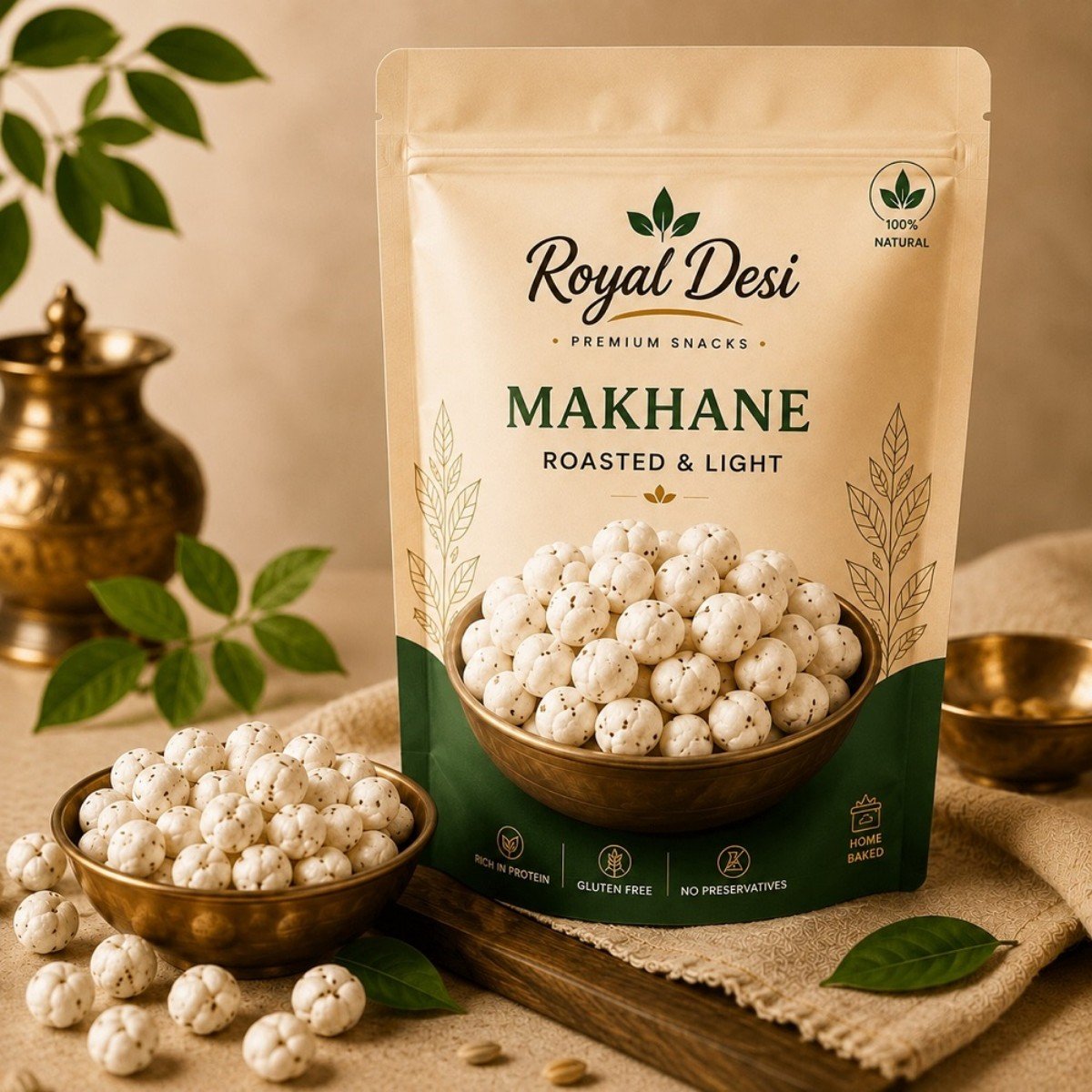
Inclusive of all taxes
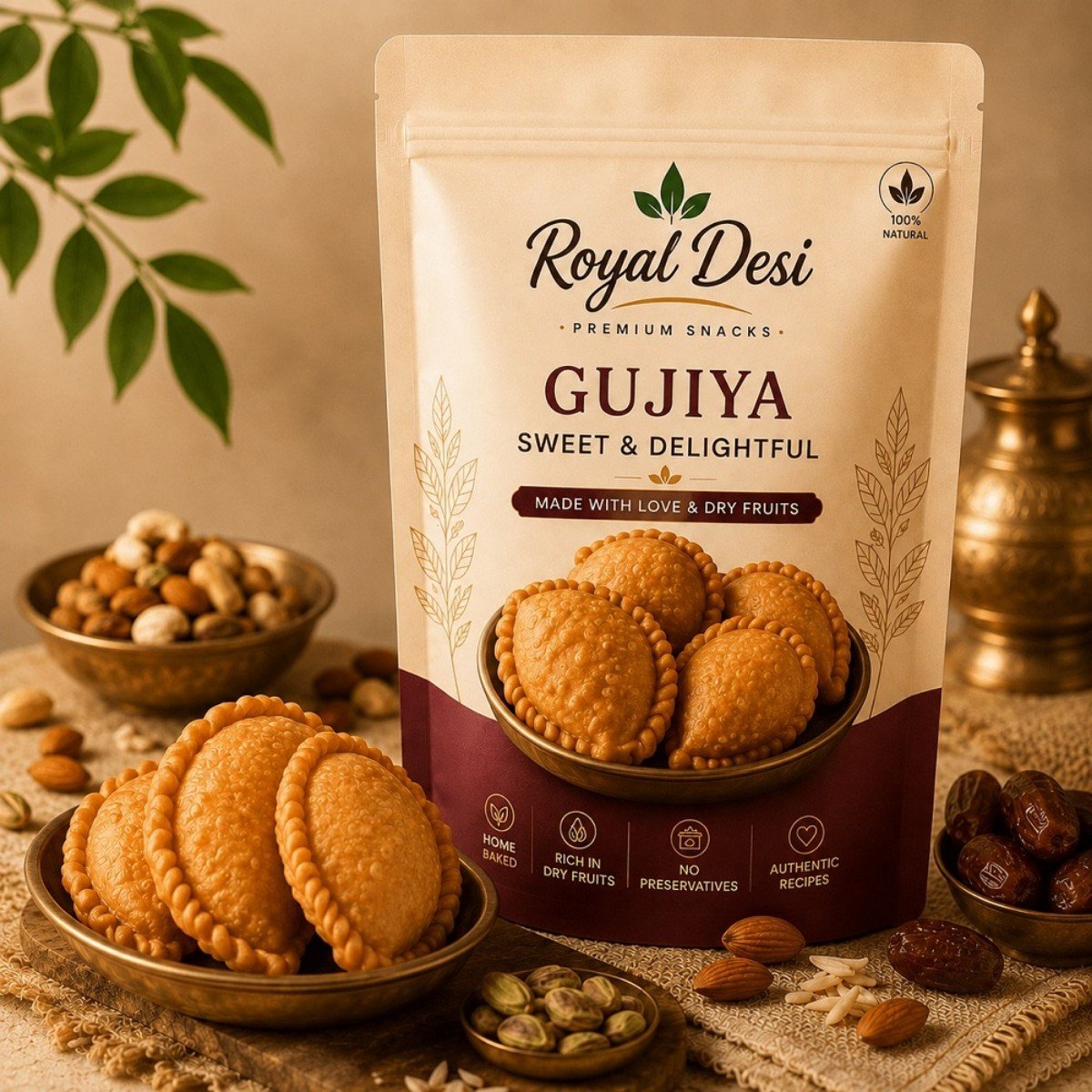
Inclusive of all taxes
Join 12,000+ subscribers for new launches, family recipes and offers we only share by email.