Why We Bake Everything (And What That Actually Changes)
Deep frying is faster, cheaper and easier to scale. Here is the honest case for why we do the slower thing anyway — and what it does to fat, texture and shelf life.
Every few months someone asks us why Royal Desi Namakpare costs a little more than the packet at the corner shop. The honest answer is that we bake it, and baking is a worse business decision on almost every axis except the one that matters.
What deep frying actually does
When dough hits oil at 180°C, the water inside it flashes to steam and escapes. That leaves behind a network of tiny cavities — and oil rushes in to fill them. A deep-fried savoury snack typically ends up carrying 28–35% of its finished weight in absorbed fat. It is quick, it is forgiving, and it produces a consistent product in three minutes.
The problem is what happens next. Frying oil in a commercial kitchen is reused across many batches. With each cycle it oxidises further, and polar compounds accumulate. That is the faint stale edge you sometimes taste in mass-market namkeen — it is not your imagination, it is chemistry.
What baking does instead
In an oven the same steam escapes, but there is no oil waiting to take its place. The cavities stay as air. Our Namakpare finishes at roughly 18 g of fat per 100 g against 28–32 g for a comparable fried product — around 40% less — and all of it is fat we deliberately added as cold-pressed groundnut oil in the dough, not fat the product drank from a vat.
- Around 40% less total fat in the finished snack
- Zero trans fat, because nothing is hydrogenated or repeatedly reheated
- Lower residual moisture, which is what actually extends shelf life without preservatives
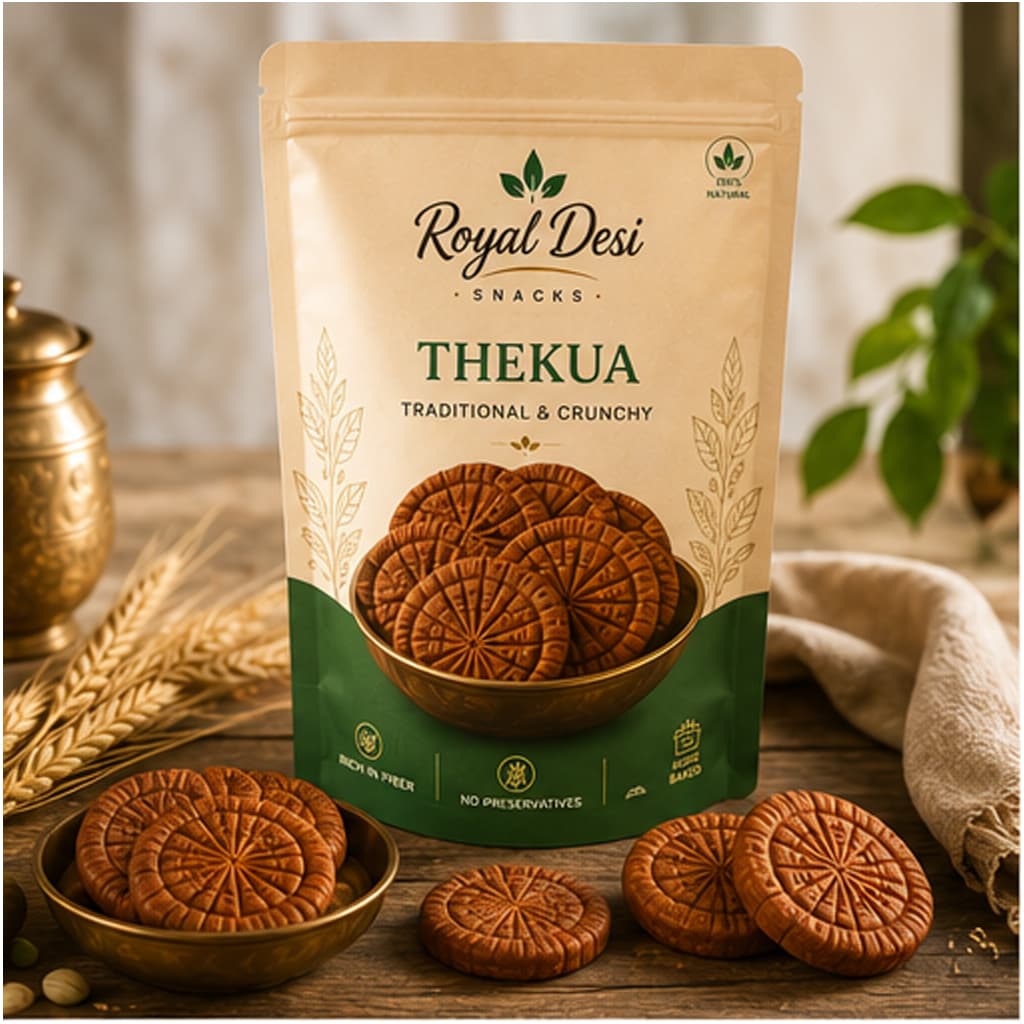
- Jaggery caramelises instead of scorching, giving Thekua its amber colour honestly
The trade-off we accept
Baking takes 22 to 40 minutes depending on the product, against three in oil. Our ovens hold a fraction of what a fryer can process in the same hour. Batches are smaller, labour per kilogram is higher, and during festival weeks we simply run out rather than switch methods.
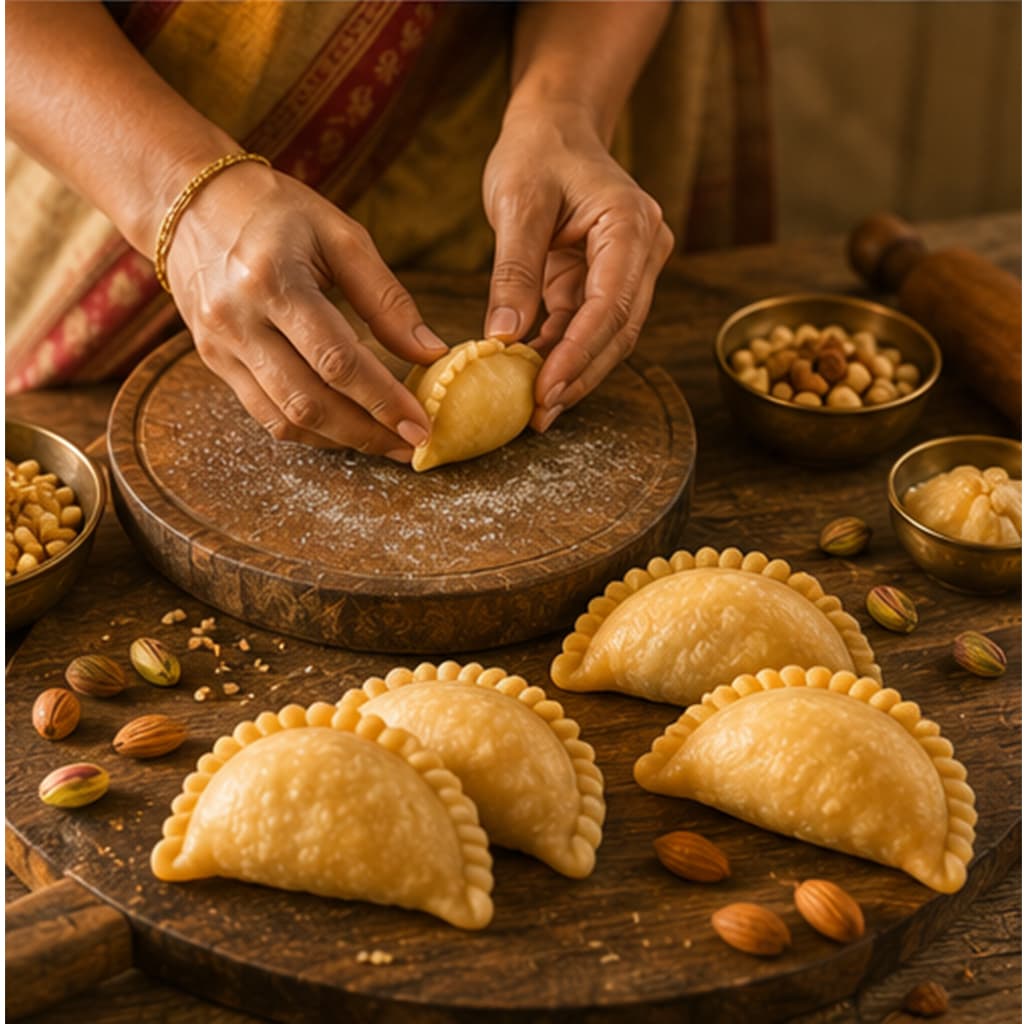
We would rather sell out of Gujiya in October than sell a version of it that we would not put in front of our own children.
The texture is different too, and worth saying plainly: baked Namakpare shatters rather than crumbles, and baked Thekua has a firmer bite than the fried version you may remember. Most people tell us it tastes cleaner. A few tell us they miss the old heaviness. Both reactions are fair — this is the version we chose to stand behind.