Thekua and Chhath: The Recipe That Refuses to Modernise
For four days every year, millions of kitchens across Bihar make the same sweet. Its rules are strict, its ingredients are three, and it has survived everything.
Chhath Puja is not a festival of abundance. It is a festival of restraint. For four days devotees fast, stand in rivers at sunrise and sunset, and prepare prasad under rules so specific that most families keep a separate set of vessels used once a year for nothing else.
Three ingredients, no negotiation
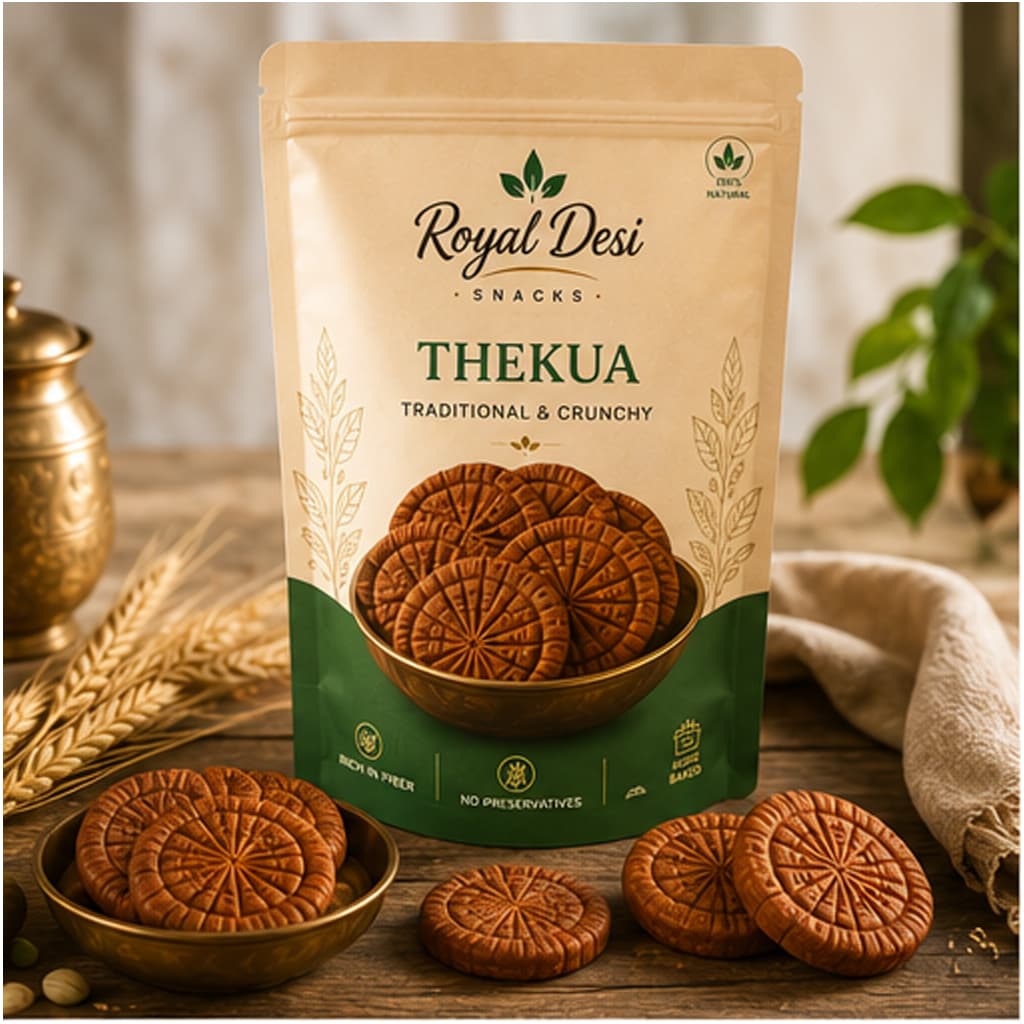
Thekua is whole wheat atta, jaggery and ghee. That is the whole list, plus cardamom and coconut if your family does it that way. There is no leavening, no egg, no milk, no refined sugar. The dough is stiff — deliberately so, because it has to hold the imprint of the wooden sancha and survive a week in a covered basket without a refrigerator.
The rules around making it are stricter than the recipe. The kitchen is scrubbed. Nobody tastes the dough while working, because prasad is offered before it is eaten. In many households the fire is lit with mango wood, and the person making it fasts alongside.
Why the shape matters
The carved patterns are not decoration for its own sake. The ridges increase surface area, which means more of the dough is exposed to heat and the piece dries evenly right through to the centre. A flat disc of the same thickness would stay soft inside and spoil within days. The flower on a Thekua is a preservation technology that happens to be beautiful.
Nobody in my grandmother’s kitchen could have told you about water activity. They just knew that the plain ones went bad first.
Our contribution is small and we are careful about it: we bake instead of deep frying, and we use organic jaggery from Muzaffarpur rather than whatever is cheapest. The proportions, the sancha and the patience are unchanged. Some recipes have already been optimised by four hundred years of people paying attention.