The Pond Farmers Behind Every Bowl of Makhana
Fox nuts are harvested by hand, from chest-deep water, by families who have done it for generations. We went to Darbhanga to meet the people we buy from.
Makhana looks like it should be simple. It is a white puff, lighter than air, sold in transparent packets everywhere from Delhi gyms to Mumbai supermarkets. Almost none of that packaging tells you that getting it out of the water is one of the most physically demanding harvests in Indian agriculture.
Five months, chest-deep
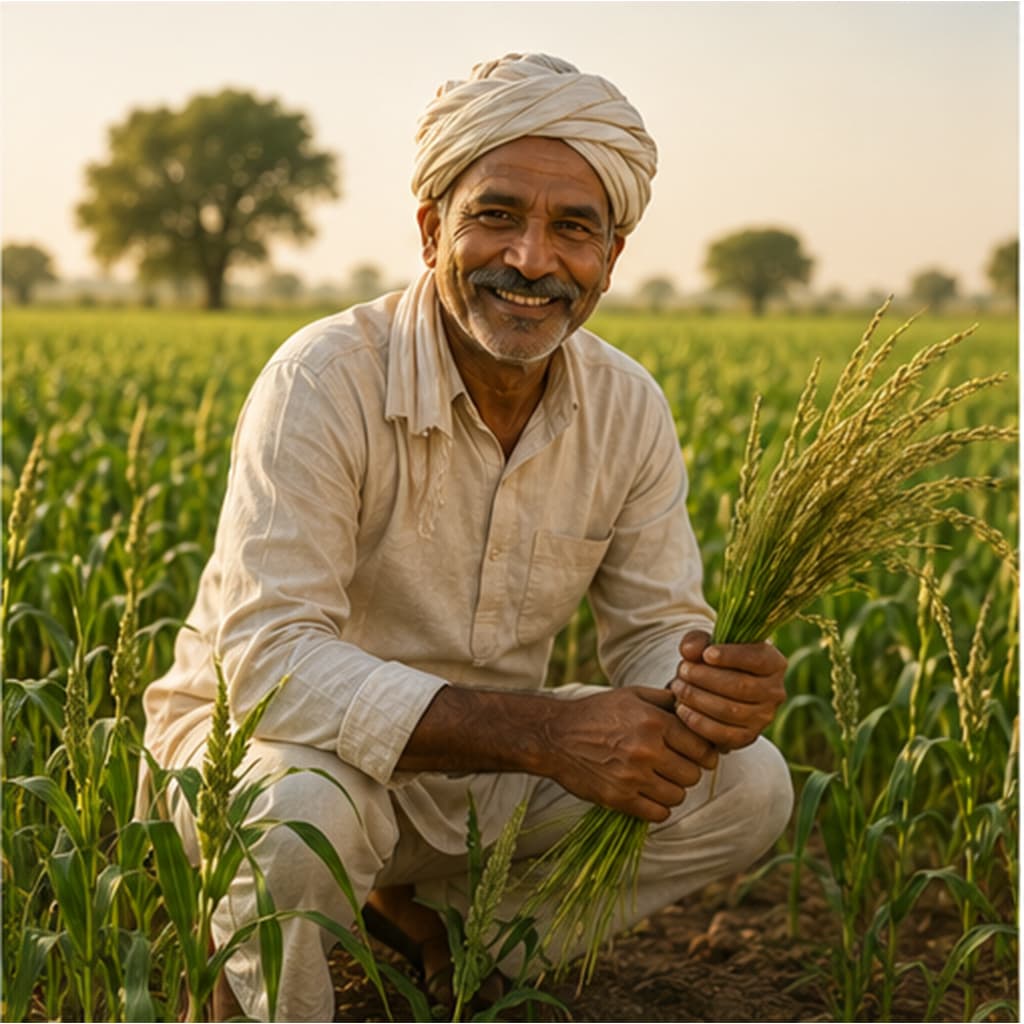
Euryale ferox grows in still ponds across north Bihar. The plant is covered in thorns. Harvesters wade in from around April, dive repeatedly to collect seeds from the pond bed by hand, and surface with them in a cloth sling. There is no machine for this step, and there has not been one for the two hundred years the crop has been cultivated here.
The seeds are then sun-dried, graded by size, roasted in a shallow iron pan at high heat, and struck at exactly the right moment with a wooden mallet so the black shell splits and the white kernel pops out whole. A skilled worker gets the timing right on nine of ten seeds. Everyone else wastes the crop.
Where the money used to go
Traditionally a harvester sells to a village aggregator, who sells to a mandi trader, who sells to a processor, who sells to a brand. By the time a 100 g pack reaches a shelf at ₹200, the family who dived for it has often received the equivalent of ₹12 to ₹18.
- We buy directly from two farmer producer collectives in Darbhanga and Madhubani
- Prices are agreed before the season starts, so a bad market week does not wipe out a family
- Payment lands within 72 hours of collection, not on 90-day credit
- We buy the full grade range and use the smaller nuts in our own kitchen rather than rejecting them
"Earlier we sold to whoever came to the village that week, at whatever price he said. Now we know the rate in March." — Devnarayan Sahni, Madhubani
We are not going to claim this fixes rural income in Bihar. We are one small buyer. But the 5-sut grade nuts in our packs cost us more than the market rate, we know the names of the people who harvested them, and that relationship is the only reason the quality is consistent enough to roast the way we do.